Hydrogen Fluoride (HF)
Hydrogen fluoride (HF) is a compound of hydrogen and fluorine that dissolves silicon dioxide. Chipmakers use it in two forms: hydrofluoric acid, a solution in water, and anhydrous HF gas. It removes native oxide, cleans wafer surfaces and etches oxide films, and semiconductor grades must have metal impurities reduced to the parts-per-trillion level.
Also called: hydrofluoric acid, anhydrous HF
Diagram
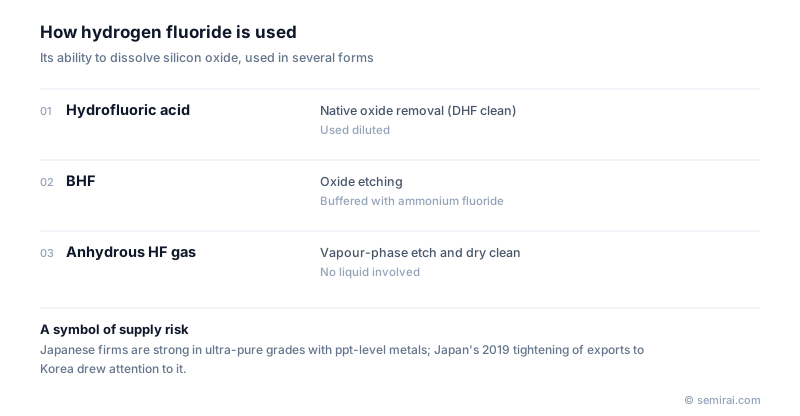
Where HF is used in a fab
Dilute hydrofluoric acid (DHF) is one step of RCA-type wet cleaning, stripping the thin native oxide and the metal contamination trapped in it. Buffered HF (BHF), which adds ammonium fluoride to stabilise the etch rate, is used to pattern or remove oxide films by wet etching. Anhydrous HF gas etches oxide in the vapour phase, for example to release moving parts in MEMS by removing a sacrificial oxide layer.
HF is also the starting material for many fluorine gases used in etching and chamber cleaning, so its supply matters well beyond the wet bench.
Why purity is hard
Because the acid touches the wafer directly, any metal it contains can stay on the surface and degrade transistors or raise leakage current. Reaching parts-per-trillion purity takes repeated distillation and purification, careful container and filling control, and consistent analysis, and this know-how is a barrier to new suppliers. The raw material is fluorspar (calcium fluoride), a large share of which comes from China, so even refined supply carries geopolitical risk.
HF also became a symbol of supply risk. In July 2019 Japan tightened its export procedures to South Korea for three items: fluorinated polyimide, photoresist and hydrogen fluoride. Korean chipmakers responded by diversifying suppliers and building local production. Japan lifted the measure in 2023, but the episode is still cited in supply chain policy as an example of dependence on a single country.
Japanese companies involved
- Stella Chemifa and Morita Chemical Industries are major producers of ultra-high-purity hydrofluoric acid for semiconductor use.
- Stella Chemifa · High-purity hydrofluoric acid and fluorine chemicals
- Kanto Denka Kogyo · Fluorine-based specialty gases
- Resonac · CMP slurries, packaging materials and SiC epitaxial wafers
- Kanto Chemical · High-purity process chemicals for cleaning, etching and CMP
FAQ
Why is hydrofluoric acid so dangerous to handle?
HF passes through skin easily and binds calcium in the tissue, causing deep burns and, after large exposures, dangerous effects on the heart. Pain may be delayed, so fabs use closed delivery systems, protective equipment and calcium gluconate gel for first aid.
Why use a buffered HF solution instead of plain HF?
Adding ammonium fluoride keeps the concentration of the etching species steady as the solution is used, so the oxide etch rate stays stable and uniform. It also attacks photoresist less, which helps when patterning oxide through a resist mask.
Related pages
- Native Oxide
- Semiconductor Export Controls
- Metal Contamination
- BHF (Buffered Hydrofluoric Acid)
- Electronic Grade Chemicals
- High-purity electronic chemicals
- Stella Chemifa Ultra-high-purity hydrofluoric acid
- Mitsubishi Gas Chemical Super-pure hydrogen peroxide
- Tanaka Precious Metals MICROFAB Au
- Tokuyama IPA SE
Sources
Last updated: November 12, 2026