Epoxy Molding Compound (EMC)
Epoxy molding compound (EMC) is the epoxy-based material used to encapsulate semiconductor chips during the molding step of packaging. It covers the die, wires and lead frame or substrate in one solid body, protecting them from moisture, contamination, light and mechanical shock, and it is used in almost every mass-produced package.
Also called: mold compound, encapsulant, mold resin
Diagram
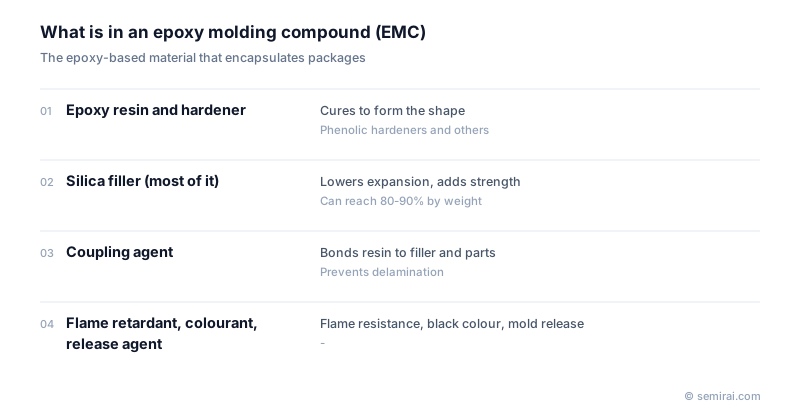
What EMC is made of
An EMC contains epoxy resin and a hardener, often a phenolic resin, plus a catalyst. Most of its weight, however, is fused silica filler, often well over 80 percent. The filler lowers the thermal expansion of the cured material towards that of silicon and copper, increases strength and reduces moisture absorption.
Smaller amounts of coupling agent improve adhesion between resin, filler and package parts. Flame retardants, carbon black for the black colour and release agents that help the part leave the mold complete the formulation. The size, shape and purity of the filler determine how well the compound flows, how much the package warps and how reliable it is.
Molding methods and new demands
In transfer molding, a preheated tablet of compound is melted and pushed through runners and gates into heated mold cavities. It is fast and mature, and is used for lead-frame packages and many BGAs. In compression molding, liquid or granular compound is placed in the mold and pressed as the mold closes, so it flows only a short distance. This suits wafer- and panel-level packages and stacked-die packages with long, thin wires.
Advanced packages are larger and thinner, so the compound must be low in stress and warpage while still filling narrow gaps without voids. Automotive and power devices need grades that stay reliable at high temperature and humidity.
Japanese companies involved
- Sumitomo Bakelite and Resonac are major Japanese suppliers of epoxy molding compounds for semiconductor packages.
- Sumitomo Bakelite · Epoxy mold compounds and package materials
- Resonac · CMP slurries, packaging materials and SiC epitaxial wafers
- Sumitomo Chemical · Photoresists and semiconductor process chemicals
FAQ
Why is mold compound black?
Carbon black is added to block light, which can generate unwanted current in the silicon, and to give a uniform surface that can be laser marked with a clear contrast.
What is the popcorn effect?
A molded package absorbs moisture from the air. If it is heated quickly during board reflow, the moisture turns to steam and can delaminate or crack the package with a popping sound. This is why packages are rated by moisture sensitivity level and baked or stored dry before assembly.
Related pages
Sources
Last updated: November 1, 2026